CCTV Cameras

Introduction

In today’s increasingly complex operational environments, choosing the right CCTV system has become a critical priority for industrial and commercial facilities. Surveillance is no longer limited to basic monitoring; it now plays a central role in safeguarding assets, ensuring employee safety, and maintaining uninterrupted business operations across large and demanding sites. 

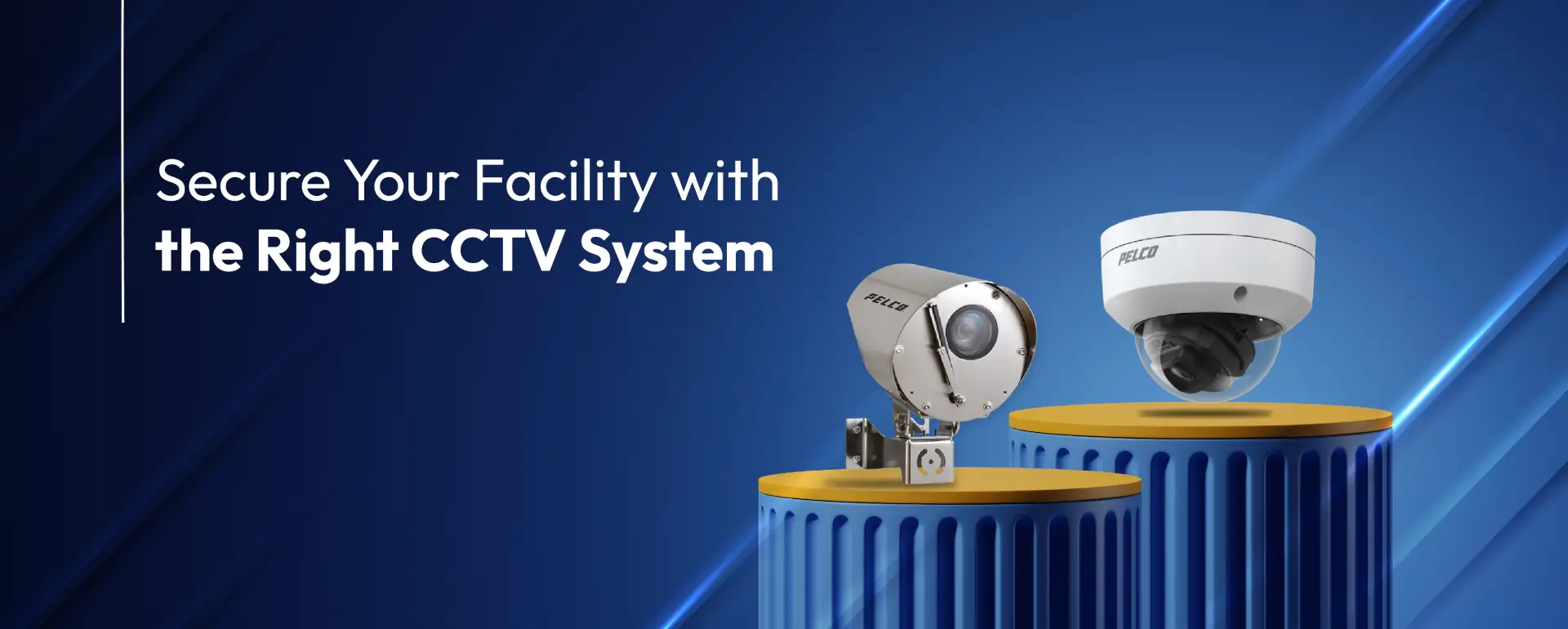
With advancements in camera technology, storage solutions, and intelligent analytics, modern CCTV systems offer far more than visual recording. Industry-leading manufacturers such as Pelco and Videotech have set benchmarks in reliability, rugged design, and performance for mission-critical surveillance, particularly in industrial, infrastructure, and outdoor environments. Selecting the right solution, therefore, requires a clear understanding of facility needs, environmental challenges, and long-term security goals. This guide explores how businesses can evaluate and choose a CCTV system that delivers reliable, scalable, and effective surveillance for industrial and commercial use. 

Why CCTV Systems Are Essential for Industrial & Commercial Facilities

CCTV systems form the foundation of effective industrial security and commercial surveillance strategies. Facilities such as factories, warehouses, offices, and retail spaces face constant risks including theft, unauthorised access, and safety incidents. 

Beyond theft prevention, surveillance systems help organisations monitor operations, enforce compliance, and respond quickly to emergencies. In industrial environments, CCTV supports hazard identification and process monitoring, while in commercial settings, it improves crowd control and asset protection. 

As facilities grow larger and more interconnected, CCTV systems become essential tools for risk management and operational continuity. 

Types of CCTV Systems

Understanding the different types of CCTV systems helps businesses select solutions aligned with their scale and requirements. 

Analog CCTV

Analog CCTV systems are typically used in small businesses with limited surveillance needs. They are cost-effective and simple to install but offer lower image quality and minimal remote monitoring capabilities. 

While suitable for basic security, analog systems may struggle to meet the demands of large or high-risk facilities. 

Digital IP CCTV

Digital CCTV, also known as IP CCTV, is widely adopted in industrial and enterprise environments. These systems deliver high-resolution footage, remote access, and seamless integration with video management platforms. 

IP cameras are ideal for facilities requiring scalability, centralised control, and advanced analytics. 

Wireless CCTV

Wireless CCTV systems reduce dependence on extensive cabling, making them suitable for facilities with layout constraints or frequent expansions. They offer faster deployment but require stable network infrastructure for reliable performance. 

HD CCTV

HD surveillance systems provide sharper images and clearer details, enabling accurate identification and effective incident analysis. High-definition cameras are now standard across most industrial and commercial surveillance installations. 

Factors to Consider When Choosing a CCTV System

Selecting the right CCTV system requires careful evaluation of operational and environmental factors. 

Resolution and Image Quality

High CCTV resolution ensures critical details such as faces, vehicle numbers, and movements are clearly captured. Poor resolution can limit the usefulness of recorded footage during investigations. 

Coverage Area

Assessing the coverage area is essential. Cameras must cover entrances, exits, production zones, storage areas, and blind spots to avoid security gaps. 

Storage Solutions

Choosing the right camera storage depends on data retention needs. On-site storage offers control, while cloud storage enables scalability and remote access. Many facilities opt for hybrid models to balance performance and cost. 

Remote Access and Monitoring

Remote access allows authorised users to view live and recorded footage from any location. This is particularly valuable for multi-site operations and after-hours monitoring. 

Durability and Weather Resistance

Industrial facilities require weather-resistant cameras capable of withstanding dust, moisture, vibration, and temperature extremes. Outdoor and heavy-duty areas demand rugged, industrial-grade equipment. 

Integration with Other Security Systems

CCTV systems should integrate seamlessly with access control, alarms, and monitoring platforms to create a unified security environment. 

Key Features to Look for in CCTV Systems

Advanced features significantly improve surveillance effectiveness. 

Motion Detection

Motion detection reduces unnecessary footage by recording only when activity is detected, improving response time and storage efficiency. 

Night Vision

Reliable night vision ensures clear monitoring in low-light or zero-light conditions, essential for warehouses, parking areas, and outdoor facilities. 

Pan-Tilt-Zoom (PTZ)

PTZ cameras allow operators to adjust viewing angles remotely, zoom into incidents, and monitor large areas with fewer devices. 

Audio Recording

Audio surveillance can support investigations in areas where verbal interaction or sound-based events are relevant. 

Smart Alerts and Analytics

AI-powered smart analytics detect unusual behaviour, intrusions, or predefined risk patterns, transforming CCTV into a proactive security tool. 

Budget Considerations

A realistic CCTV system budget should consider both upfront investment and long-term operational costs. 

Entry-Level Systems

Suitable for small facilities with basic monitoring needs, these systems provide cost-effective surveillance with limited features. 

Mid-Range Systems

Mid-range solutions balance affordability and performance, offering HD cameras, remote access, and essential analytics. 

High-End Systems

High-end systems include AI analytics, cloud integration, advanced PTZ cameras, and enterprise-grade storage. While costlier, they offer scalability and long-term value. 

Installation and Maintenance of CCTV Systems

Technology alone is not enough without proper deployment. 

Professional Installation 

Expert CCTV installation ensures optimal camera placement, network configuration, and reliable system performance. 

Ongoing Maintenance 

Regular CCTV maintenance, including firmware updates, camera cleaning, and storage checks, keeps systems operating efficiently and extends equipment lifespan. 

Legal and Compliance Considerations

CCTV usage must align with legal surveillance standards and privacy regulations. 

Compliance Requirements 

Facilities must ensure CCTV compliance with local laws, including appropriate signage, controlled access to footage, and documentation. 

Data Privacy 

Strong data privacy practices protect recorded footage from misuse and unauthorised access, ensuring regulatory adherence and organisational trust. 

Choosing the Right CCTV Vendor

Selecting the right partner is crucial for long-term success. 

What to Look For 

Reliable CCTV vendors and security system providers & distributors like Sheetal Wireless offer proven expertise, quality hardware, and dependable after-sales support. 

Vendor Evaluation Tips 

Assess trusted CCTV suppliers like Sheetal Wireless based on experience, scalability, service capabilities, and technical support. 

Conclusion

Choosing the right CCTV system is a strategic decision for any industrial or commercial facility. From understanding system types and advanced features to evaluating budget, compliance, durability, and vendor reliability, each factor contributes to building a strong and resilient security foundation. 

By investing in proven industrial surveillance technologies from trusted manufacturers like Pelco and Videotec, organisations can deploy systems engineered for harsh conditions, continuous operation, and long-term scalability. The right commercial security solution not only enhances safety and operational efficiency but also protects high-value assets and supports future expansion. A well-chosen CCTV system ultimately becomes a critical pillar of sustainable, secure, and well-managed industrial operations. 

Related Blogs