Industrial Radio Remote Controls

Introduction

Across plants, warehouses, ports, and construction sites, industrial operations are evolving rapidly as smarter technologies reshape safety and efficiency. As machinery becomes larger and more complex, traditional wired or manual control systems are increasingly seen as limitations rather than solutions. Long cables, restricted movement, and delayed response times often expose operators to unnecessary risks and slow down operations. 
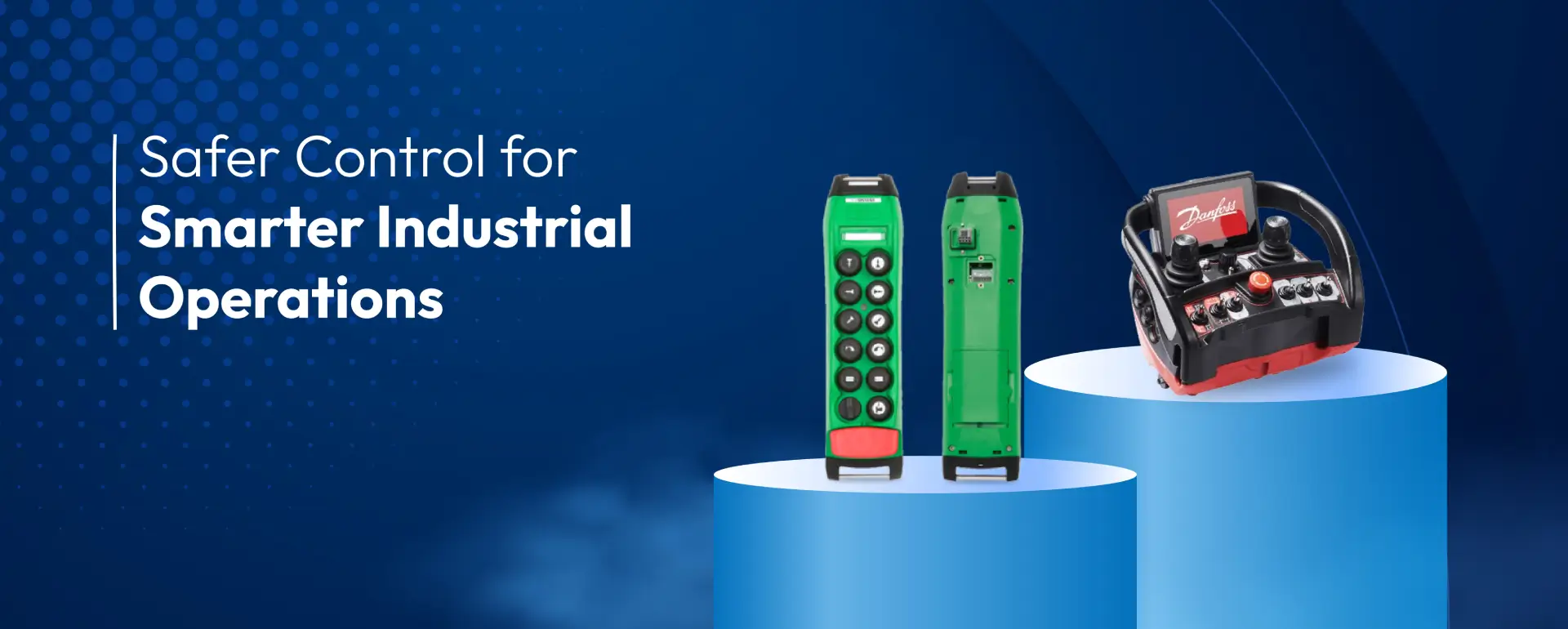
This shift has brought Industrial Radio Remote Controls into focus as a safer and more efficient alternative. By enabling the wireless operation of heavy equipment, these systems allow operators to maintain a safe distance from hazardous zones while retaining full control and visibility. Advanced solutions such as Remote Control T70-1Remote Control T70-2and Remote Control R13B exemplify how modern wireless remote-control systems are designed to handle demanding industrial environments while improving operational safety. 

For facilities upgrading their control infrastructure, exploring advanced radio remote control solutions has become an essential step toward safer, more precise, and more agile operations. 

What are Industrial Radio Remote Controls?

Industrial radio remote controls are wireless systems that allow operators to control machinery from a safe distance using handheld or belt-mounted transmitters. These systems use secure radio signals to send commands from the operator to a receiver mounted on the equipment. 

Unlike wired controls, which restrict movement and expose operators to operational hazards, industrial wireless remote-control solutions provide freedom of movement and real-time responsiveness. Commands are transmitted instantly, allowing precise control even in dynamic industrial environments. 

These systems are widely used across sectors where safety, mobility, and accuracy are critical. From heavy lifting operations to mobile machinery, radio remote controls have become standard in many modern industrial facilities. 

Typical Applications

Industrial radio remote controls are commonly deployed in: 

  • Cranes and hoists, where precise lifting and positioning are essential 
  • Material handling equipment, such as conveyors, stackers, and loaders 
  • Industrial machinery and mobile equipment, including crushers, mixers, and automated platforms 

In particular, radio remote control for cranes has become an industry benchmark for improving operator safety and load handling accuracy. 

Improving Workplace Safety with Wireless Remote Controls

Safety is one of the primary drivers behind the adoption of wireless control for industrial equipment. Industrial environments often involve moving loads, high temperatures, and heavy machinery, all of which pose significant risks to operators. 

Wireless remote-control systems allow operators to maintain a safe distance from machinery while retaining complete operational control. This separation significantly reduces the risk of accidents caused by proximity to moving or suspended loads. 

Improved line-of-sight control is another key safety benefit. Operators can position themselves at the best vantage point instead of being fixed to a control panel, improving awareness of surroundings and reducing blind spots. 

Modern systems also incorporate emergency stop functions and fail-safe mechanisms. If a signal is lost or an emergency occurs, the equipment automatically shuts down, making industrial remote control safety solutions a critical layer of protection in high-risk environments. 

Reducing Operator Fatigue and Human Error

Operator fatigue is a common contributor to industrial accidents. Wired systems often require repetitive movements, awkward postures, or constant repositioning, increasing physical strain over long shifts. 

Wireless remote controls are designed with ergonomics in mind. Lightweight handheld transmitters, intuitive button layouts, and simplified multi-function controls reduce physical effort and mental load. This leads to better focus, improved situational awareness, and fewer operational errors. 

By reducing fatigue and simplifying control, wireless remote controls for heavy machinery help create safer and more sustainable working conditions. 

Precision Control in Industrial Operations

Precision is critical in industrial operations where even minor errors can result in damaged equipment, material loss, or safety incidents. Industrial radio remote controls provide highly responsive command execution, allowing operators to make fine adjustments with confidence. 

Advanced systems deliver smooth and proportional control, which is especially important when handling heavy or sensitive loads. Reliable signal performance ensures commands are executed without lag, even in environments with high electromagnetic interference. 

This level of accuracy makes remote control systems for material handling indispensable in industries where consistency and control quality directly impact productivity. 

Why Precision Matters in Material Handling

In material handling operations, precision directly affects: 

  • Load stability, reducing the risk of swinging or shifting 
  • Equipment protection, minimising wear and accidental impacts 
  • Coordination between operators and ground staff, improving safety during complex lifts 

A well-designed crane remote control system allows operators to manage loads smoothly, reducing stress on both machinery and personnel. 

Boosting Productivity and Operational Efficiency

Beyond safety and precision, industrial radio remote controls play a major role in improving productivity. Wireless operation allows tasks to be completed faster by eliminating unnecessary repositioning and delays associated with wired systems. 

Operators can control equipment from the most efficient position, reducing downtime between operations. This flexibility is especially valuable in busy industrial sites where multiple tasks occur simultaneously. 

Wireless systems also reduce maintenance requirements. Without cables that can wear, tangle, or break, downtime caused by control system failures is significantly reduced. 

Wireless Controls vs Traditional Systems

When comparing wireless controls to traditional systems, several advantages stand out: 

  • Setup time is shorter, as there is no need for extensive cabling 
  • Maintenance requirements are lower due to fewer mechanical wear points 
  • Operational scalability is higher, allowing systems to adapt as facilities expand 

These benefits make industrial wireless remote-control solutions a smart long-term investment for growing operations. 

Key Features to Look for in Industrial Radio Remote Controls

Selecting the right system requires careful evaluation of key features that impact performance and reliability. 

Signal reliability and range are essential, especially in large facilities or outdoor environments. The system must maintain stable communication without interference. 

Durability and rugged design are equally important. Industrial remote controls should be built to withstand dust, moisture, vibration, and temperature extremes. 

Multi-function capability allows operators to control multiple movements or machines from a single device, improving efficiency. 

Finally, compliance with industrial safety standards ensures the system meets regulatory requirements and provides dependable fail-safe operation. 

When evaluating options, it is important to consider proven solutions such as advanced radio remote control models designed specifically for industrial use, including systems suited for cranes, material handling, and mobile machinery. 

Choosing the Right Industrial Remote Control for Your Application

There is no one-size-fits-all solution in industrial environments. Choosing the right system depends on several factors. 

The type of equipment being controlled determines the level of precision, range, and functionality required. Cranes, for example, demand different control characteristics than conveyors or mobile platforms. 

Environmental conditions also play a major role. Outdoor sites, high-temperature areas, or dusty environments require more rugged systems. 

Operator skill level should be considered to ensure controls are intuitive and easy to use. Proper training combined with ergonomic design improves safety and efficiency. 

Finally, safety and compliance needs must align with industry regulations and internal safety policies. Selecting a system that meets these requirements ensures long-term reliability and regulatory confidence. 

Conclusion

Industrial radio remote controls have become a cornerstone of modern industrial operations. By replacing wired and manual systems, they significantly improve safety, enhance precision, and boost productivity across a wide range of applications. 

From reducing operator exposure to hazardous zones to enabling smoother control of heavy equipment, wireless remote-control systems deliver long-term operational value. Solutions such as Remote Control T70-1Remote Control T70-2, and Remote Control R13B demonstrate how precision control, reliable signal performance, and ergonomic operation can directly improve outcomes in crane operations, material handling, and mobile machinery. 

As industries continue to modernise, investing in reliable industrial radio remote controls is no longer optional but essential. Businesses that adopt these solutions position themselves for safer operations, higher efficiency, and scalable growth. 

To explore advanced radio remote control solutions tailored for industrial applications, now is the right time to upgrade control systems and build a safer, more productive future. 

Related Blogs