Advanced Machine safety for Industrial Envoirments

Reducing Collision Risks in Bulk Material Handling with Smarter Machine Monitoring

Introduction

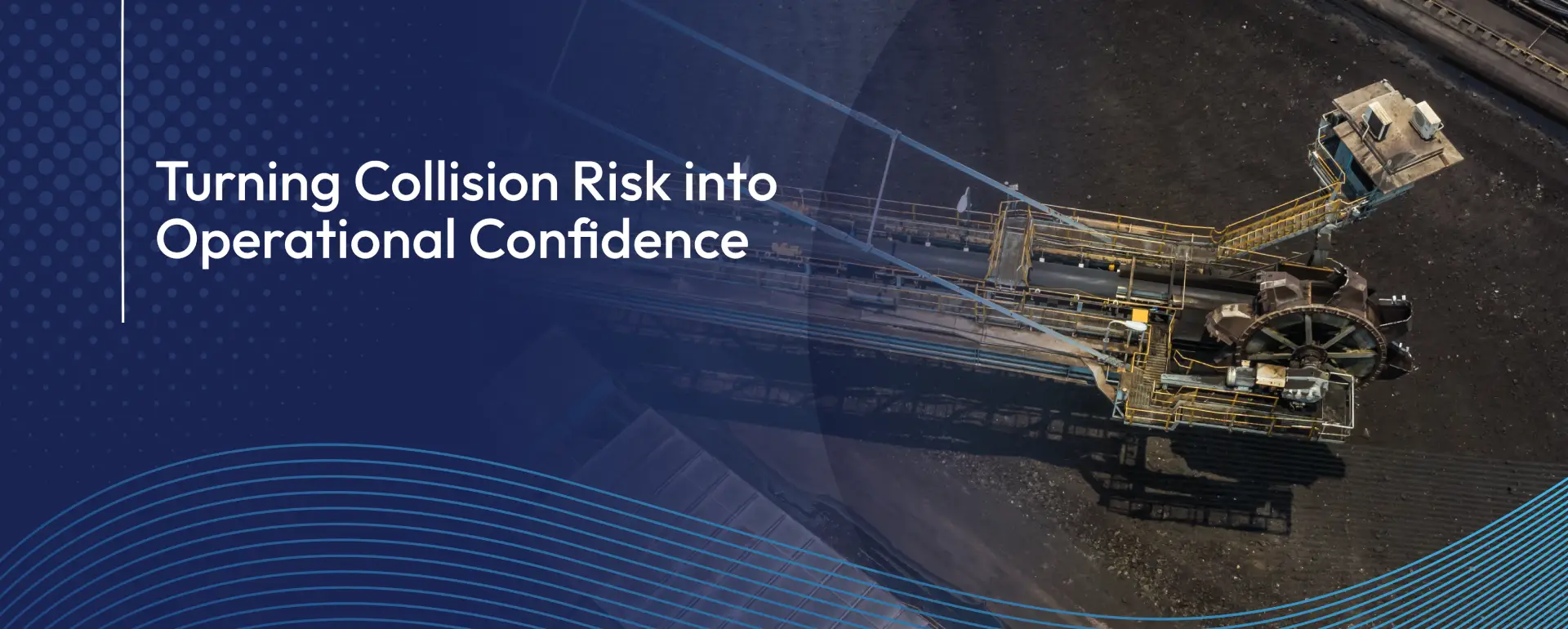
Bulk material handling operations are built around constant movement. Across mines, ports, cement plants, steel facilities, and power generation yards, machines such as stackers, reclaimers, conveyors, and mobile equipment operate continuously under demanding conditions. While these operations drive productivity, they also create one persistent challenge, bulk material handling safety. 

Large moving machines often work in proximity, with limited visibility, heavy dust, vibration, and congested operating zones. In such environments, even a small positioning error can lead to machine collision, operational shutdown, costly repairs, material handling delays, and serious safety risks for personnel. 

This is why industries are shifting from reactive safety practices to intelligent monitoring systems. Modern machine collision avoidance systems, such as the industrial monitoring and anti-collision solutions offered by Sheetal Wireless, continuously track machine movement, calculate proximity, and detect risk before an incident occurs. Their machine collision avoidance solution uses time-of-flight positioning with 5-10 cm accuracy and integrates directly with existing PLC systems, enabling reliable anti-collision logic without requiring major infrastructure changes.  

Today, smart machine monitoring is becoming essential for safer, smarter, and more productive material handling operations. 

Understanding Collision Risks in Bulk Material Handling

Blind Spots Around Large Moving Equipment

Heavy equipment comes with natural visibility limitations. Long boom arms, rotating structures, and oversized operating footprints create blind zones that operators cannot fully monitor in real time. 

When stackers and reclaimers move within shared stockyard zones, visibility becomes even more restricted, increasing collision probability. 

Machine Positioning Errors

In large-scale operations, small positional deviations create major consequences. A slight misalignment in the machine travel path, boom swing, or rotation angle can cause direct equipment clashes. 

This is where a stacker reclaimer monitoring system becomes critical. 

Operator Dependency and Human Error

Traditional operations depend heavily on operator judgment. Fatigue, delayed reactions, limited visibility, and operational pressure increase the chances of human error.

Congested Shared Workspaces

Bulk handling yards often involve the simultaneous movement of multiple heavy machines. This operational congestion makes heavy equipment collision prevention increasingly difficult through manual monitoring alone.

What Smarter Machine Monitoring Means

Modern industrial machine safety systems move beyond alarms. They create a live safety intelligence layer. 

Real-Time Position Monitoring

Machine location is continuously tracked with precision, providing operators and central control rooms instant visibility of equipment movement.

Automated Proximity Detection

Systems detect when machinery approaches unsafe operating zones or another moving machine.

Predictive Collision Alerts

Instead of warning after danger appears, predictive systems identify collision probability earlycreating enough reaction time for prevention. 

Automatic Operational Response

Advanced systems can trigger: 

  • Warning alarms  
  • Speed reduction  
  • Movement restrictions  
  • Emergency stop activation  

This is true industrial collision avoidance, preventing risk before impact happens. 

How Intelligent Monitoring Reduces Collision Risks

Early Risk Detection

The biggest advantage of industrial machine monitoring for safer operations is prevention before escalation. 

Machines receive alerts before entering unsafe proximity. 

Monitoring Beyond Human Vision

Technology watches continuously, through dust, darkness, vibration, and operational blind spots. 

It sees what operators cannot. 

Faster Decision-Making

Instant alerts reduce reaction time dramatically, allowing safer operational decisions. 

Reduced Manual Supervision

Automation-backed safety systems reduce dependency on constant human monitoring while improving operational control. 

This is how industries are reducing collision risks in bulk material handling through smarter automation. 

Improving Stacker Reclaimer Safety Through Smart Monitoring

Stacker reclaimers operate in harsh open-yard environments where radio reflections, dust, and large machine movement create safety challenges. Sheetal Wireless addresses this through wireless communication and stacker reclaimer collision prevention technology designed specifically for such demanding environments.  

Precision Positioning

Accurate live tracking improves machine control. 

Collision Avoidance Between Parallel Machines

Parallel equipment movement is continuously monitored to prevent overlap or unsafe proximity. 

Safer Rotation and Travel

Monitoring slewing angle, travel path, and boom movement improves operational awareness. 

Improved Reliability

Fewer collisions mean: 

  • Lower wear and tear  
  • Reduced structural damage  
  • Longer equipment life  
  • Higher uptime  

This is smart monitoring for stacker reclaimers in practical industrial use. 

Operational Benefits Beyond Safety

  • Reduced Downtime 

Fewer incidents mean fewer shutdowns. 

  • Lower Maintenance Costs 

Less collision damage reduces repair frequency. 

  • Higher Equipment Availability 

Reliable machines stay operational longer. 

  • Improved Operator Confidence 

Operators work with greater visibility and less uncertainty. 

  • Higher Throughput 

Safer machine movement creates smoother stockyard workflows. 

In short, automation solutions for bulk material handling safety improve both protection and productivity. 

Industries Seeing Immediate Impact

Smarter monitoring is transforming operations across: 

  • Mining – Heavy mobile machinery coordination  
  • Cement Plants – Safer stockyard handling  
  • Steel Plants – Reliable yard movement monitoring  
  • Ports & Terminals – High-density equipment safety  
  • Power Plants – Coal yard operational control  
  • Bulk Storage Yards – Improved traffic management  

Anywhere large machinery moves, collision avoidance systems for heavy machinery create immediate value. 

What to Look for in a Monitoring System

The right solution should offer: 

  •  Accurate position detection  
  • Reliable operation in dust, vibration, and harsh climates
  • Easy PLC / SCADA integration
  • Real-time alerts and automated responses
  • Scalable deployment across large sites
  • Low-maintenance infrastructure 

Conclusion

Collision prevention in modern stockyards is no longer just about alarms; it is about intelligence. 

Facilities investing in bulk material handling automation and smarter monitoring systems are reducing risk, improving uptime, and increasing operational confidence. 

From predictive alerts to automated intervention, smart machine monitoring turns safety into operational advantage. 

For industries looking to improve stacker reclaimer safety and strengthen bulk material handling safety, smarter monitoring is no longer optional; it is the next operational standard.  

Related Blogs