Which Motorola Radio Repeater Is Right for Your Industrial Network? SLR 5300 vs SLR 8000
Which Motorola Radio Repeater Is Right for Your Industrial Network? SLR 5300 vs SLR 8000 Introduction When an industrial facility

When an industrial facility expands its radio network or begins experiencing communication gaps, choosing the right repeater becomes an important infrastructure decision. Coverage requirements, existing radios, site conditions, traffic levels and future expansion plans all influence which solution is appropriate.
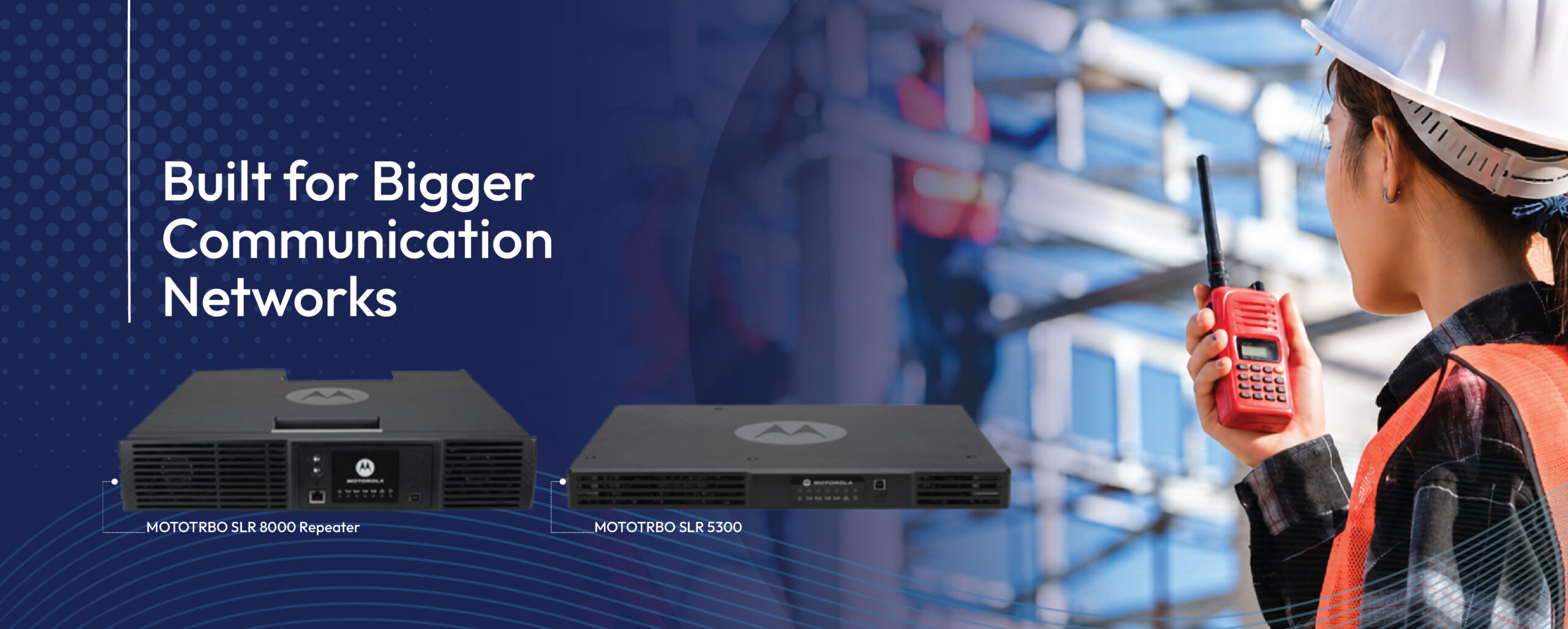
The Motorola radio repeater range includes the MOTOTRBO SLR 5300 and SLR 8000, both designed for dependable professional two-way radio communication. However, they differ in output power, physical footprint and certain deployment characteristics. Wireless Solution
For industrial teams, the decision should therefore go beyond simply choosing the higher-powered model. This comparison explains the key differences between the Motorola SLR 5300 and Motorola SLR 8000 and the requirements that can favour each.
Both models support MOTOTRBO digital radio infrastructure and can be used in demanding professional environments. The SLR 5300 is a compact 1U repeater with up to 50 W RF output, while the SLR 8000 is a 2U unit supporting up to 100 W continuous transmit power Wireless Solution.
The specifications above are drawn from current Sheetal Wireless-hosted product datasheets and Motorola documentation. Availability of particular frequency variants and features is subject to regional regulations and configuration. Wireless Solution
For buyers, three differences stand out. First is output power: the SLR 8000 offers up to 100 W compared with 50 W on the SLR 5300. Second is physical size, with the SLR 5300’s compact 1U form factor compared with the SLR 8000’s 2U rack requirement. Third is system architecture support, particularly where a network is being designed around Capacity Max or other specific MOTOTRBO configurations. Motorola Solutions
A repeater should be selected around the actual communication environment rather than an assumed range figure. Production buildings, warehouses, steel structures, outdoor yards, terrain and other physical obstructions can all influence radio coverage.
A higher transmitter output does not automatically guarantee reliable communication everywhere. Antenna height, antenna type, feeder losses, building construction and repeater location are equally important.
For example, a manufacturing facility with a compact indoor footprint and clearly defined coverage requirement may find the SLR 5300’s 50 W capability and compact design appropriate. A geographically broader operation with more demanding coverage requirements may benefit from the SLR 8000’s higher available output and high-sensitivity receiver architecture. Wireless Solution
The number of radios deployed is not the same as the number of conversations occurring simultaneously. Procurement teams should consider peak communication demand, required channels, existing radio models, frequency bands and whether the network uses conventional or trunked operation.
Both units support MOTOTRBO architectures, but the precise architecture and licensing requirements should be verified against the proposed system design. Wireless Solution
Expansion should also be considered. Additional production areas, departments, sites or communication functions may require changes to the repeater architecture, networking infrastructure, software or licences.
The SLR 5300 supports single-site and several MOTOTRBO networking architectures, while the SLR 8000 adds support for Capacity Max alongside other MOTOTRBO architectures. Wireless Solution
Choosing a DMR repeater is only one part of designing a dependable radio network. Before deployment, teams should verify:
Testing should be performed at the places where communication actually matters: production areas, control rooms, loading zones, outdoor yards and emergency-response points. This provides a more realistic assessment than relying solely on theoretical coverage.
Consider the SLR 5300 when a compact 1U installation, up to 50 W output, lower-power architecture and MOTOTRBO features suited to the site’s communication requirements are priorities. Its field-replaceable modules, integrated battery charger and optional remote management also support practical site deployment. Wireless Solution
Consider the SLR 8000 when the network requires up to 100 W continuous transmit power, a 2U rack format, or specific MOTOTRBO architectures such as Capacity Max. Its modular design and configurable options can also support more specialised infrastructure requirements. Motorola Solutions
Neither model is universally “better.” The right choice depends on the network architecture, coverage requirement, equipment compatibility and future operating plan.
Selecting a two-way radio repeater is most effective when it is treated as part of the complete communication system. Sheetal Wireless provides Motorola repeater solutions and identifies expertise in MOTOTRBO communication solutions, including installation, integration and technical support. Wireless Solution
When seeking guidance, industrial teams should share their site layout, critical communication locations, existing radio and repeater details, current coverage issues and anticipated changes in workforce or network requirements.
This information helps determine the appropriate model, frequency configuration and supporting infrastructure rather than selecting a repeater in isolation. Sheetal Wireless’s SLR 8000 offering also highlights installation and integration support as part of its repeater solution approach. Wireless Solution
The right repeater should match your industrial network’s coverage requirements, communication traffic, existing equipment and future plans. The Motorola SLR 5300 and SLR 8000 offer different combinations of power, footprint and system capabilities rather than a simple good-versus-better choice.
For help evaluating your site and selecting the appropriate repeater configuration, discuss your requirements with Sheetal Wireless.
Explore the Motorola SLR 5300 · Explore the Motorola SLR 8000
The most notable differences are output power and physical footprint. The SLR 5300 supports up to 50 W in a compact 1U design, while the SLR 8000 supports up to 100 W and uses a 2U rack format. Their supported architectures also differ in some areas. Wireless Solution
They can support MOTOTRBO radio networks, but compatibility should be verified for the specific radio model, frequency band, operating mode and system architecture. Not every Motorola radio is automatically compatible with every repeater configuration. Wireless Solution
Not necessarily. Coverage depends on the facility layout, construction materials, terrain, antenna system, repeater position and other RF conditions. A site assessment and practical coverage testing are recommended before finalising the system.
Yes, expansion can be possible depending on the selected MOTOTRBO architecture and system design. Additional equipment, software, licences or network infrastructure may be required as coverage, capacity or functionality increases. Motorola Solutions

Which Motorola Radio Repeater Is Right for Your Industrial Network? SLR 5300 vs SLR 8000 Introduction When an industrial facility

How a PAGA System Supports Faster Emergency Alerts Across Industrial Facilities Introduction – When Every Second Matters During an Industrial
How to Improve Communication in Noisy Industrial Environments with the Motorola R7 Walkie-Talkie Introduction In a manufacturing or steel plant,

Why the Right DMR Mobile Radio Matters for Transport and Fleet Operations: Motorola XiR M8668i Introduction: When Fleet Communication Cannot Afford Delays

How Motorola TLK 110 PoC Radio Supports Safer and More Efficient Industrial Operations Introduction Modern industrial operations rarely stay within

How Two-Way Radios Improve Communication and Safety in Oil & Gas Operations Introduction Oil & Gas operations span refineries, oilfields,