Reducing Collision Risks in Bulk Material Handling with Smarter Machine Monitoring
Reducing Collision Risks in Bulk Material Handling with Smarter Machine Monitoring Introduction Bulk material handling operations are built around constant
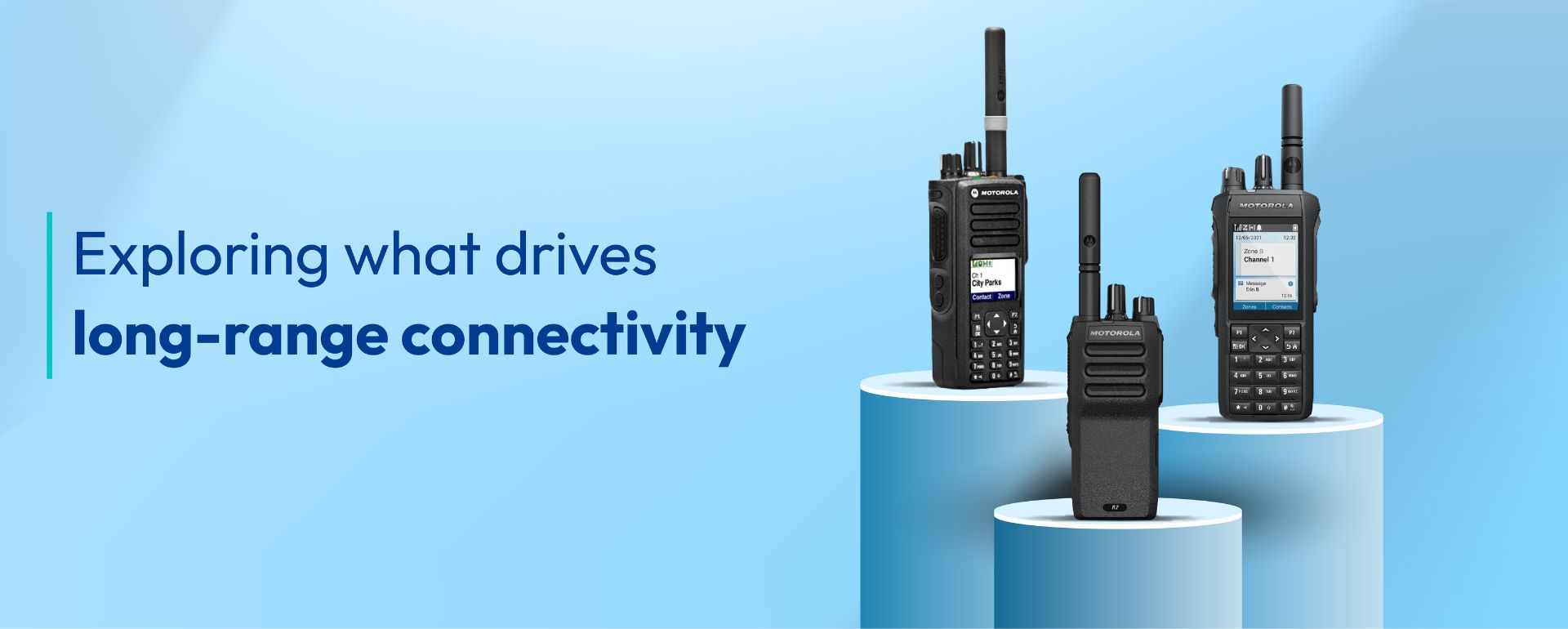
In a world dominated by smartphones and Wi-Fi, walkie-talkies remain indispensable for professionals and adventurers who need reliable, real-time communication in remote or challenging environments. Whether coordinating security teams, managing large-scale events, or trekking through rugged terrains, the need for long-range walkie-talkies is undeniable.
But what makes these devices capable of transmitting signals over such vast distances? Let’s delve into the science behind their impressive range.
At the core of every walkie-talkie is two-way radio communication, allowing users to send and receive messages using radio waves. These devices operate on a half-duplex system, meaning they can either transmit or receive signals at any given time, but not both simultaneously. This is facilitated by the push-to-talk (PTT) mechanism, where pressing a button activates the transmitter.
Walkie-talkies utilise specific radio frequencies to communicate. The two primary frequency bands used are:
Understanding the differences between UHF and VHF is crucial when selecting the appropriate walkie-talkie for specific environments.
The ability of walkie-talkies to transmit signals over extended distances is influenced by several factors:
Radio waves are electromagnetic waves that carry signals through the air. The frequency of these waves determines their propagation characteristics. Lower frequencies, like those in the VHF band, can travel longer distances and are less affected by obstacles compared to higher frequencies in the UHF band.
Choosing between UHF and VHF depends on the specific requirements of the communication environment.
Several key components enhance the performance and range of walkie-talkies:
The antenna is a critical element in determining the range and clarity of a walkie-talkie. Its design, length, and placement can significantly impact signal strength. Higher-quality antennas can improve reception and transmission, especially in challenging environments.
The power output of a walkie-talkie, measured in watts, directly affects its transmission distance. Higher power allows the device to send signals over greater distances, though it may also lead to increased battery consumption.
A sensitive receiver can detect weaker signals, improving communication in areas with low signal strength. This is particularly important in remote or obstructed environments.
External factors such as weather conditions, electromagnetic interference, and physical obstructions can degrade signal quality. Walkie-talkies equipped with features like squelch control and noise filters can mitigate these issues, ensuring clearer communication.
The actual range of a walkie-talkie can vary based on several environmental factors:
Understanding these factors is essential when planning communication strategies in various environments.
To extend the range of walkie-talkies, especially in large areas or challenging terrains, repeaters are used. These devices receive a weak signal and retransmit it at a higher power, effectively extending the communication range.
Additionally, advancements in technology have led to the development of digital walkie-talkies that offer enhanced clarity, longer reach, and features like encryption for secure communication.
Long-range walkie-talkies are employed in various sectors:
These applications highlight the versatility and importance of long-range walkie-talkies in diverse scenarios.
When selecting a long-range walkie-talkie, consider the following specifications:
Balancing these factors will help in selecting the most suitable walkie-talkie for specific needs.
Understanding the science behind how long-range walkie-talkies work is crucial for selecting the right device for specific communication needs. By considering factors like frequency band, power output, antenna performance, and environmental conditions, users can ensure reliable communication in various scenarios.
For more information on selecting the appropriate walkie-talkie for your needs, explore our range of wireless communication devices designed for diverse environments.

Reducing Collision Risks in Bulk Material Handling with Smarter Machine Monitoring Introduction Bulk material handling operations are built around constant

The Future of Industrial Safety: Advancements in Machine Collision Avoidance Systems Introduction Industrial environments are becoming more complex as automation,

The Role of Smart Surveillance in Safeguarding Critical Infrastructure and Transportation Introduction Critical infrastructure and transportation networks are essential to

The Role of Repeaters in Modern Digital Radio Networks: Ensuring Reliable Communication Across Long Distances Introduction In today’s rapidly evolving

Top 10 Features of the Motorola XIR P8668 That Boost Team Safety and Productivity Introduction In today’s fast-paced and demanding

Why Wireless Communication Is Replacing Wired Systems in Modern Industries Introduction For decades, industrial communication depended heavily on wired networks