Role of Smart Surveillance in Safeguarding

The Role of Smart Surveillance in Safeguarding Critical Infrastructure and Transportation

Introduction

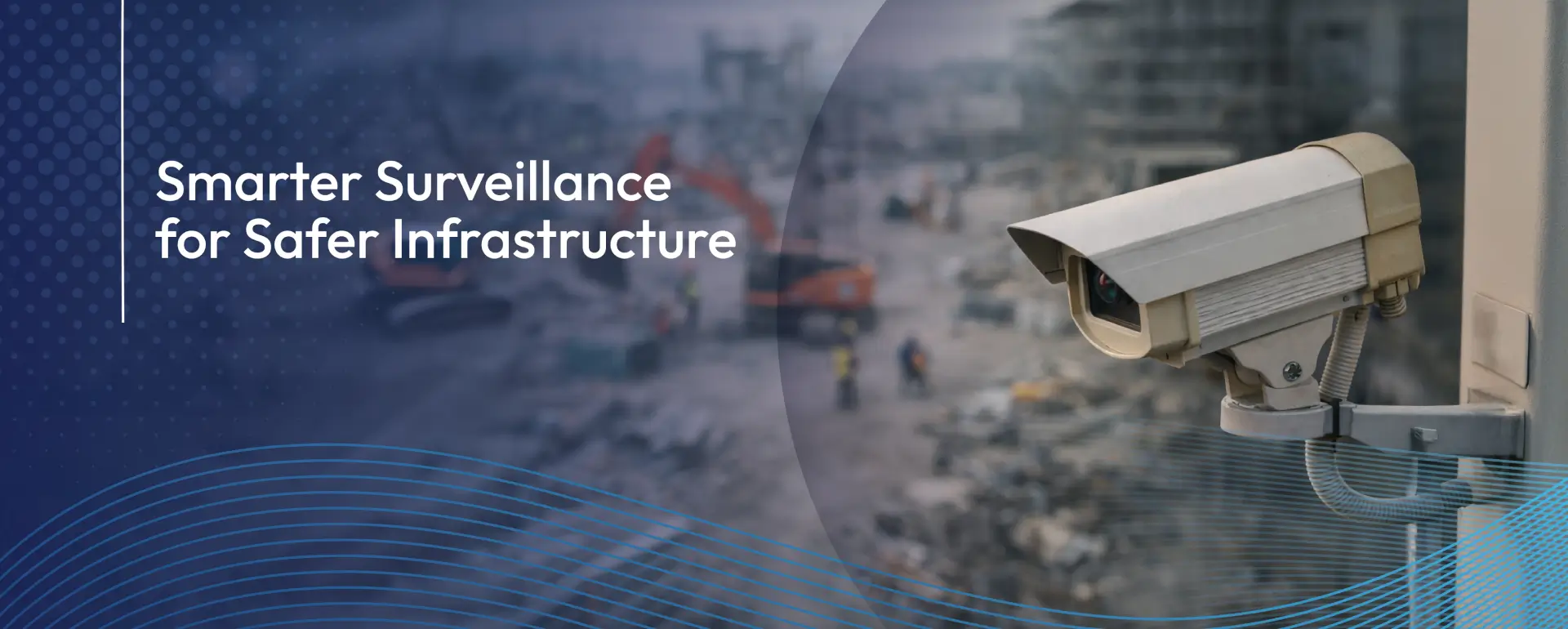
Critical infrastructure and transportation networks are essential to modern urban operations. Airports, railways, highways, power plants, and industrial facilities support daily activities and ensure public safety. Any disruption in these environments can lead to delays, operational risks, and financial losses. As these systems become more complex, traditional monitoring methods are no longer sufficient. This is where smart surveillance systems play a crucial role. 

Smart surveillance enables continuous monitoring, intelligent threat detection, and faster response across infrastructure environments. From critical infrastructure surveillance in industrial facilities to transportation surveillance solutions in airports and highways, advanced monitoring improves visibility and operational control. With integrated industrial surveillance technology, organisations can enhance safety, reduce risks, and maintain smooth operations. 

Why Smart Surveillance is Vital for Critical Infrastructure and Transportation

Constant Monitoring for Immediate Incident Response

Critical infrastructure operates around the clock. Facilities such as transportation hubs, highways, metro stations, and industrial plants require continuous monitoring to detect incidents before they escalate. Security surveillance for infrastructure provides 24/7 visibility, enabling operators to respond quickly to accidents, unauthorised access, or system failures. 

For example, video surveillance for transportation can detect stalled vehicles, track congestion, and alert control rooms in real time. Similarly, CCTV for infrastructure safety helps monitor restricted zones and equipment areas in industrial facilities, reducing downtime and improving operational continuity. 

Preventing Security Breaches and Ensuring Public Safety

Transportation and infrastructure facilities often include restricted zones requiring strict monitoring. Smart surveillance helps detect unauthorized movement, suspicious behavior, and safety risks. Smart cameras for transportation can monitor entry points, track crowd density, and identify unusual activity. 

This level of real-time monitoring for transportation improves safety across airports, railway stations, and transit networks. Security teams can quickly detect unattended baggage, unauthorised access, or emergency situations and respond immediately. 

Integration with Advanced Security Systems

Modern integrated surveillance systems connect cameras with alarms, access control, and command centres. This creates a unified infrastructure safety system that improves situational awareness and speeds up response times. 

For example, when unauthorised access is detected, surveillance systems trigger alerts, notify control rooms, and activate security protocols simultaneously. This integrated approach enhances both safety and operational efficiency. 

How Sheetal Wireless Surveillance Solutions Enhance Safety

Sheetal Wireless provides advanced surveillance solutions for critical infrastructure designed for transportation hubs, industrial facilities, and smart city environments. These systems support real-time monitoring, integrated communication, and scalable deployment

Real-Time Monitoring with Advanced CCTV Systems

Smart surveillance enables continuous monitoring of transportation terminals, highways, and infrastructure environments. Operators can access live feeds from centralized control rooms and respond quickly to incidents. This improves visibility across large areas and enhances operational control. 

For example, a transportation terminal can use centralized monitoring to manage passenger movement, monitor security checkpoints, and detect safety risks. Industrial facilities can monitor restricted zones and equipment areas to maintain operational safety. 

AI-Driven Analytics for Smarter Monitoring

Modern industrial surveillance technology includes intelligent video analytics that automatically detect unusual activity. These systems identify movement patterns, generate alerts, and improve monitoring efficiency. 

Examples include: 

  • Detecting unattended baggage in airports  
  • Monitoring crowd density in metro stations  
  • Identifying unauthorized access in industrial facilities  
  • Tracking vehicle movement in logistics hubs  

These capabilities help organisations move from reactive monitoring to proactive safety management. 

Key Benefits of Smart Surveillance in Critical Infrastructure

Enhanced Operational Efficiency and Reduced Downtime

Smart surveillance helps identify operational issues early. Traffic disruptions, equipment failures, and safety risks can be detected before they escalate. This improves system efficiency and reduces downtime. 

For example, transportation surveillance solutions can detect accidents on highways and notify response teams immediately. In industrial environments, surveillance systems help identify equipment issues and safety hazards. 

Cost Savings Through Proactive Monitoring

Integrated surveillance reduces operational costs by minimizing incidents, theft, and manual monitoring requirements. With real-time monitoring for transportation, organisations can deploy resources efficiently and reduce on-site staffing needs. 

Preventive monitoring also reduces maintenance costs by identifying issues early and avoiding major failures. 

Scalable and Flexible Solutions

Modern smart surveillance systems are scalable and adaptable. Infrastructure and transportation networks expand over time, and surveillance systems must support this growth. Organisations can add cameras, analytics, and monitoring points without replacing existing infrastructure. 

This flexibility makes surveillance solutions for critical infrastructure suitable for expanding transportation networks and smart city environments. 

Real-World Applications of Smart Surveillance

Airports and Seaports

Airports and seaports require continuous monitoring of passenger movement, restricted areas, and operational zones. Smart surveillance helps track movement, enhance perimeter security, and detect suspicious behaviourSmart cameras for transportation improve coordination between security teams and operations staff. 

Highways and Railroads

Highways and rail networks benefit from video surveillance for transportation that detects congestion, accidents, and safety violations. Intelligent analytics alert control rooms and improve response times. Rail infrastructure also uses critical infrastructure surveillance to monitor tracks, stations, and operational areas. 

Public Transit Systems

Public transport systems such as buses, metro networks, and trains rely on integrated surveillance systems for passenger safety and operational control. Cameras monitor platforms, entry points, and vehicles in real time, improving safety and reducing risks. 

The Technology Behind Smart Surveillance

AI and Video Analytics

AI-powered surveillance systems analyze video feeds and detect anomalies automatically. These systems recognize patterns, identify threats, and generate alerts. This transforms traditional CCTV into intelligent monitoring tools. 

AI-based smart surveillance for industrial infrastructure security improves safety and reduces manual monitoring. 

Edge Computing and Cloud-Based Monitoring

Edge computing processes data closer to the source, reducing latency and enabling faster response. Cloud-based monitoring allows centralized visibility across multiple locations. This combination improves performance and scalability. 

Seamless Integration with Existing Systems

Modern surveillance solutions integrate with communication networks, control rooms, and security platforms. This allows organizations to enhance security without replacing existing infrastructure. Sheetal Wireless solutions support seamless deployment across transportation and industrial environments. 

The Technology Behind Smart Surveillance

Privacy and Data Protection

Organizations must balance surveillance with privacy requirements. Proper data management, access control, and compliance policies are essential for secure operations. 

System Integration and Maintenance

Deploying advanced surveillance solutions for transportation and critical infrastructure requires proper planning. Regular maintenance and updates ensure optimal performance and long-term reliability.

Conclusion

Smart surveillance is essential for protecting transportation networks and critical infrastructure. From critical infrastructure surveillance to transportation surveillance solutions, intelligent monitoring improves safety, operational efficiency, and incident response. As infrastructure continues to expand, scalable and integrated surveillance systems will become increasingly important. 

Sheetal Wireless delivers advanced smart surveillance systems designed for infrastructure and transportation environments. With real-time monitoring, intelligent analytics, and scalable deployment, organisations can enhance safety and operational control. 

Ensure your critical infrastructure is protected with Sheetal Wireless’ advanced surveillance solutions. Get in touch with us to learn how our systems can enhance your operations and improve infrastructure safety.  

Related Blogs